
Anerkannt von
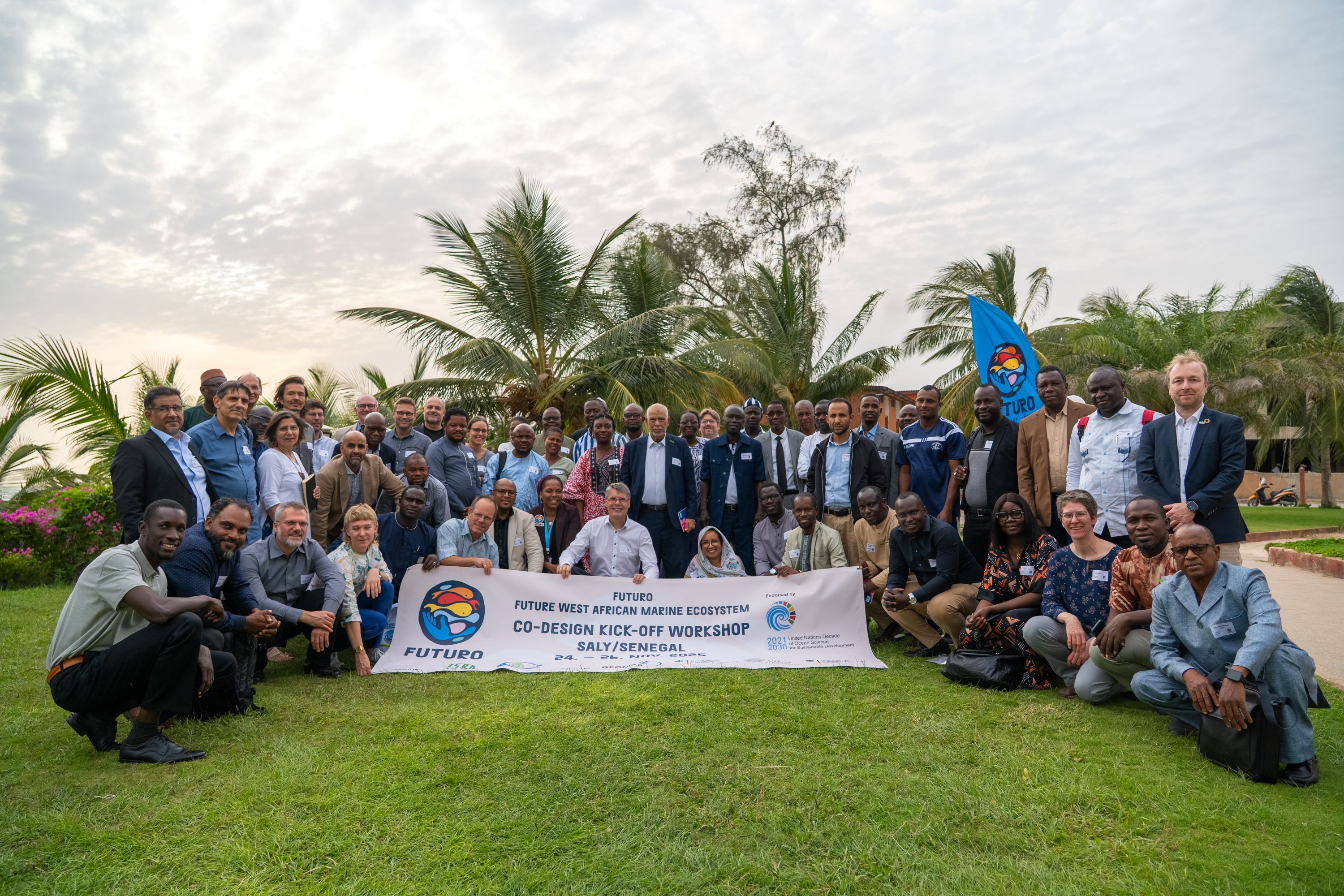
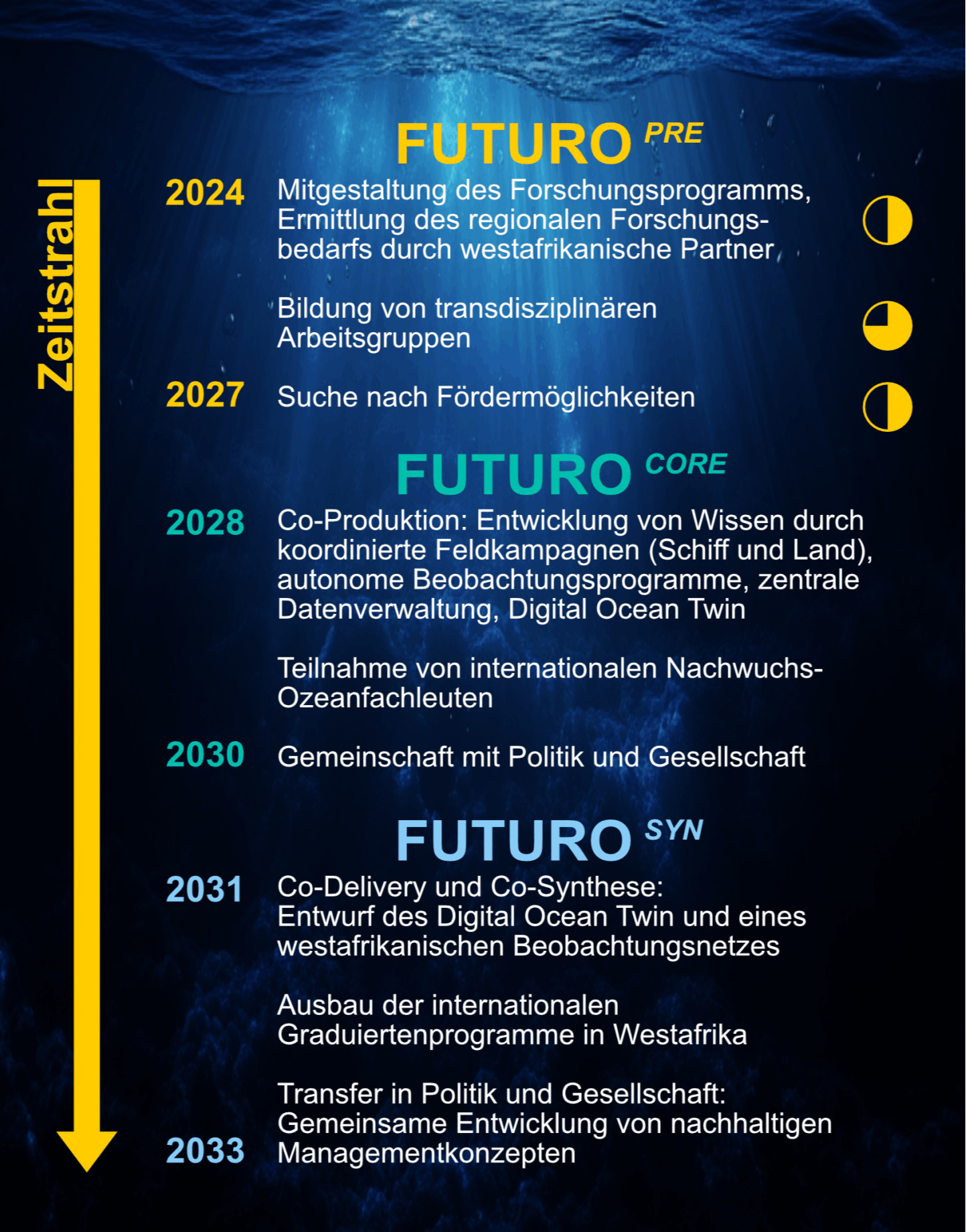
Vom 24. bis 26. November 2025 kamen fast 70 Teilnehmende aus Westafrika und Europa zum FUTURO Co-Design Kick-Off Workshop nach Saly im Senegal. Vertreter aus Wissenschaft, Zivilgesellschaft und Politik aus Mauretanien, Senegal, Kap Verde, Gambia, Guinea-Bissau, Guinea, Sierra Leone und Deutschland sowie aus mehreren überregionalen Organisationen nahmen gemeinsam an der Entwicklung von Forschungsthemen und Programmelementen für FUTURO teil. Zum Abschluss des Workshops verabschiedeten alle Teilnehmende die „Saly Declaration” (auf Englisch) – ein starker Aufruf, sich an FUTURO zu beteiligen, die Zusammenarbeit zwischen Wissenschaft und Gesellschaft in Westafrika zu stärken und sie mit den notwendigen politischen und finanziellen Rahmenbedingungen zu unterstützen. „Mit der Saly Declaration übernehmen wir gemeinsam Verantwortung für das bedeutende Meeresökosystem vor Westafrika, einer der produktivsten Regionen im Ozean“, so Edwin Mwashinga, Program Officer bei IOC-AFRICA.
Es gibt kein
systematisches Überwachungsnetz




Das Ziel ist es, ein
nachhaltiges Managementsystem
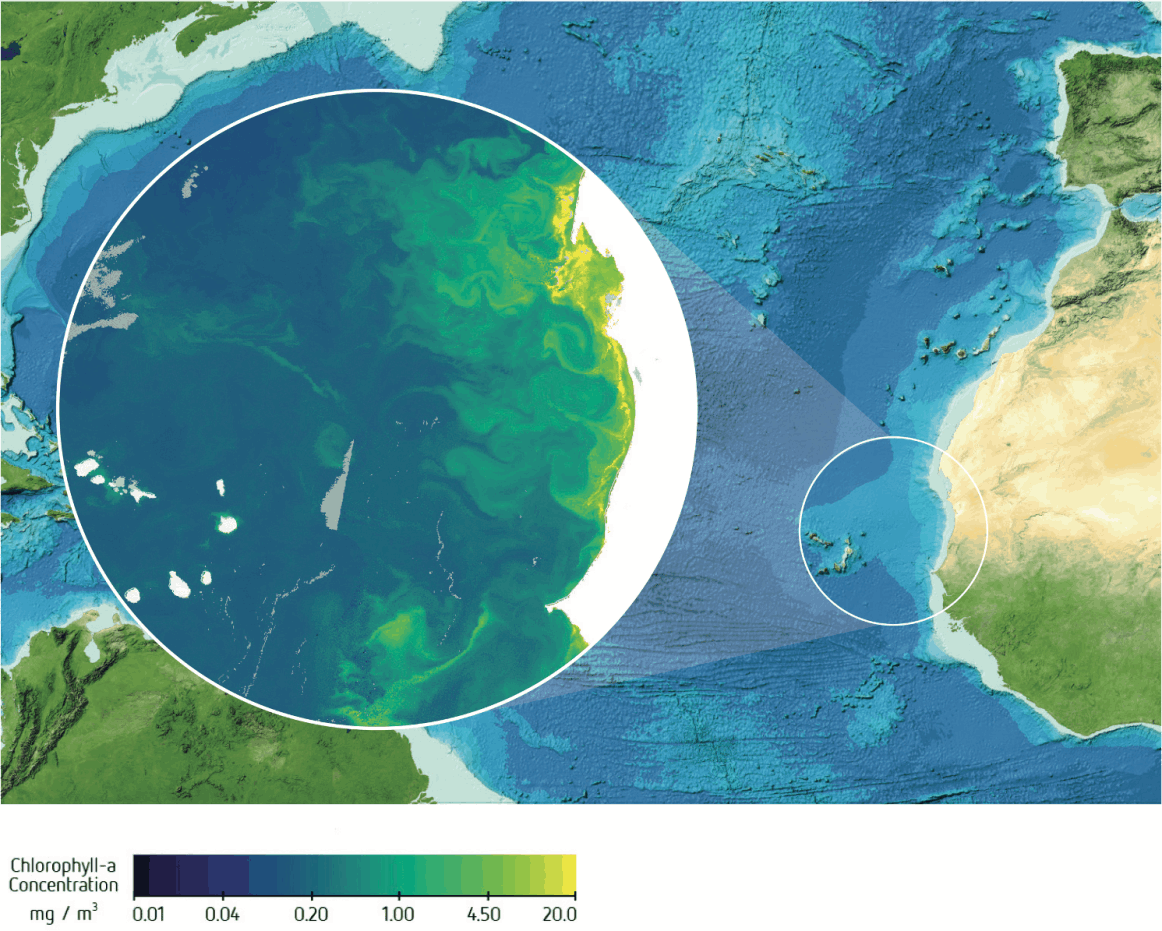
Eastern Boundary Upwelling Systems. The coastal upwelling zones on the eastern edges of the Atlantic and Pacific Oceans are among the most biologically productive regions of the oceans. These ecosystems are defined by ocean currents that bring nutrient-rich but oxygen-poor waters to coasts that line the eastern edges of the world's ocean basins. These regions generate more than 10% of primary marine production on less than 1% of the ocean's surface and account for 20-30% of global fisheries production.
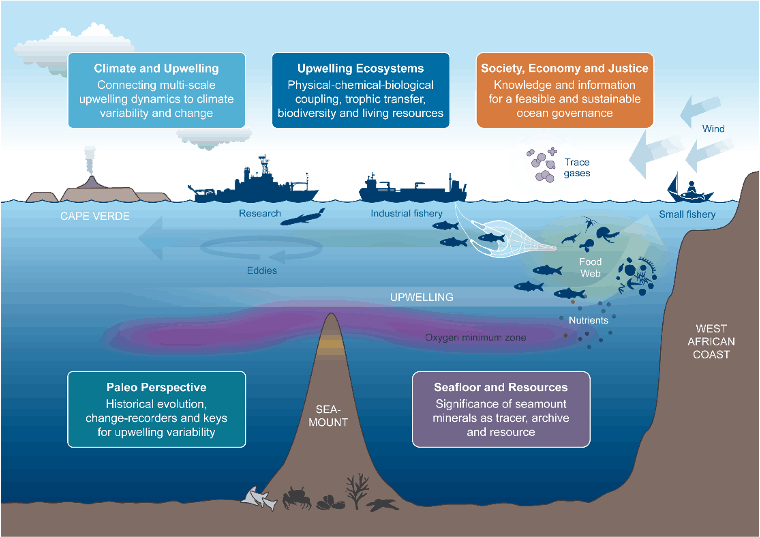
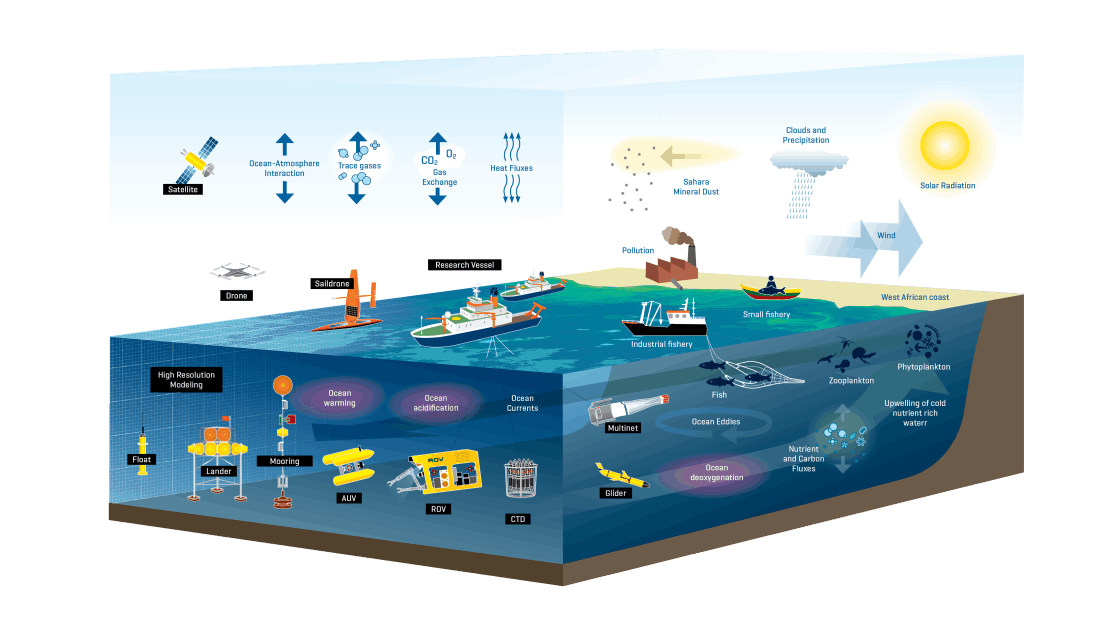
Overview of processes and research topics in the Tropical Atlantic Upwelling Region
Tropical upwelling regions play an active role in climate and oceanic biogeochemical cycles and they host the most productive ocean food chains. They support the largest fisheries of the world and are home to a biodiverse marine environment. In the upwelling region, anthropogenic impacts will therefore have disproportionately large consequences for human society. Ocean warming, ocean acidification, and oxygen depletion converge and may lead to synergistic effects with negative impacts on ecosystem function. Reliable future scenarios of changes in ecosystem services, which are extremely important for humanity, are lacking.
Multidisciplinary research on natural and societal systems in tropical upwelling regimes facilitates the assessment of future fisheries and economic potential, conservation strategies and climate connections.
FUTURO region
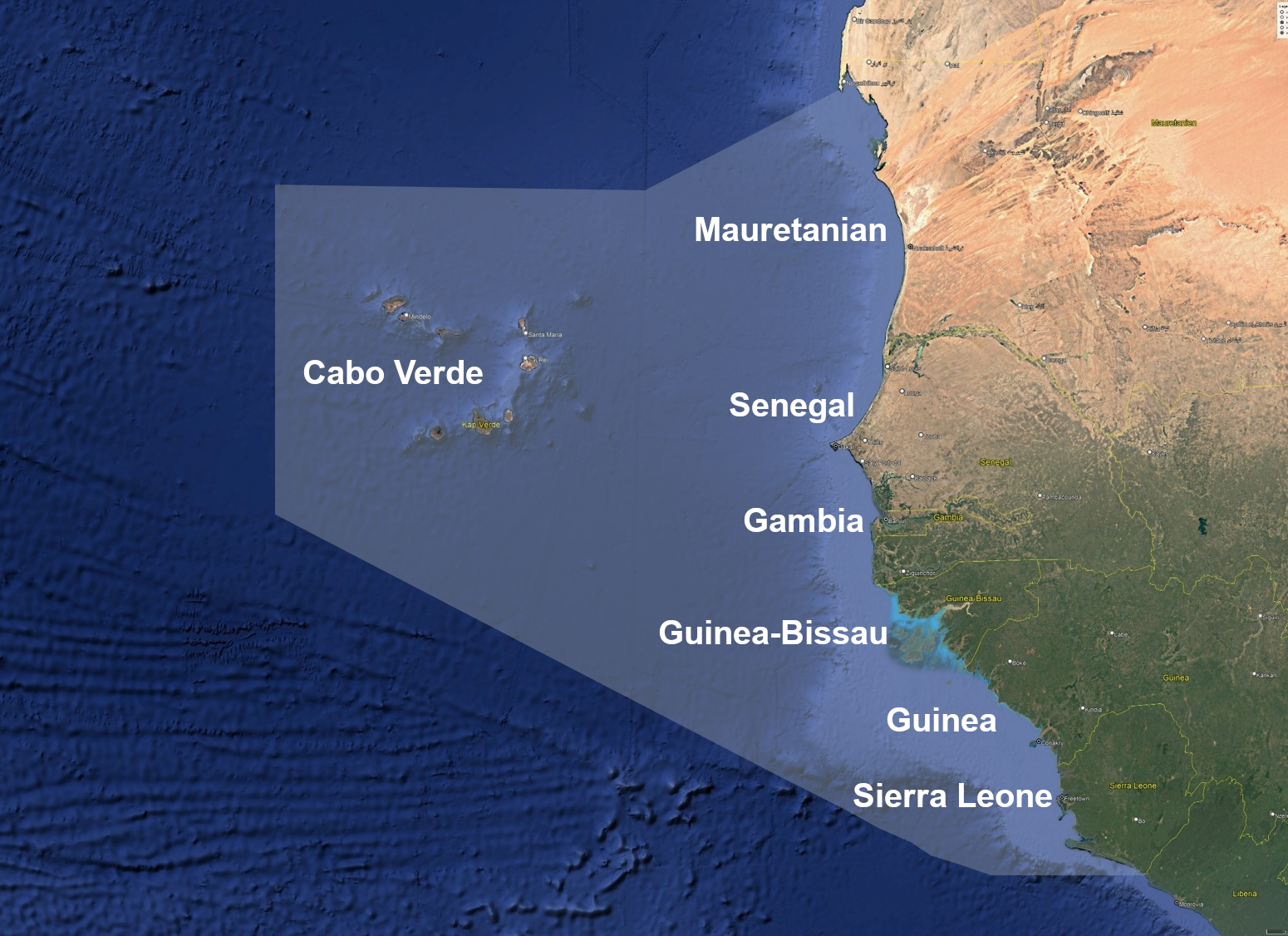
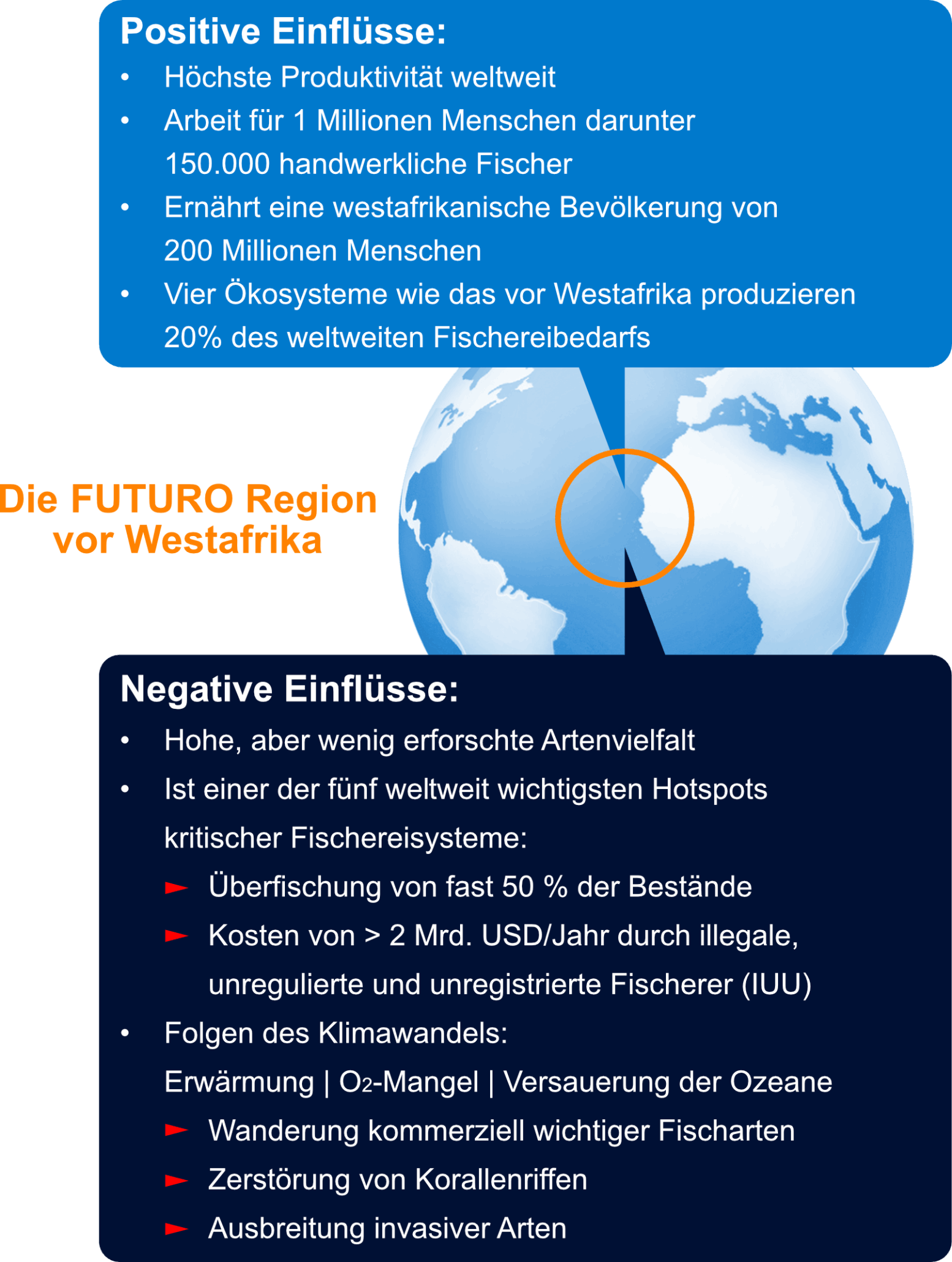
The particularly species-rich and productive coastal upwelling area off West Africa provides employment for around 1 million people, including 150,000 artisanal fishers. This region supports a West African population of 450 million people and generates revenues of approximately 3 billion US dollars. It plays an integral role in the climate system and is subject to strong, overlapping anthropogenic influences. FUTURO will focus on the Mauritania-Senegal upwelling region (12-21° N) and will extend out to the Cabo Verde archipelago.
Concerted Ocean Observation
FUTURO is based on the following values and practices:
- Active partnership with West African researchers, stakeholders & marine research institutes: West African experts will be essential partners in the co-design of the campaign. They are invited to become partners of the FUTURO experiment.
- Involvement of all interested parties in the German research landscape: The experiment is a major joint project initiated by leading national research institutes in Germany.
- Coordination with international research communities: The experiment is to be widely presented and promoted internationally. Scientific co-operations are explicitly desired.
The aim of FUTURO is to develop a significantly improved system understanding and robust predictive capability for the future development of this coastal upwelling region, which is of extremely high socio-economic importance. Fisheries yields from this region, which is particularly affected by anthropogenic influences, are of great importance for the economy of almost all West African countries and thus have a concrete impact on the living conditions of people in the Sahel. The focus during the final FUTURO phase will be the synthesis and transdisciplinary transfer of knowledge to guide sustainable ecosystem management actions that benefit the local population.

Prof. Dr. Arne Körtzinger
Professor für Meereschemie, Topic 6
Forschungsbereich 2: Marine Biogeochemie
Forschungseinheit: Chemische Ozeanographie
Wischhofstr. 1-3
24148 Kiel, Deutschland
E-Mail: futuro@geomar.de
Telefon: +49 (0) 431 600 1952

Designed by Team FUTURO